
WinCrown · Welcome bonus200 free spins on selected slots
Reviews (9,827)
4.9Rating
 Best casinos available in AustraliaUpdated 7 November 2026
WinCrown · Welcome bonus200 free spins on selected slots
Reviews (9,827)
4.9Rating
The software for online casino sites comes in layers: a platform that runs accounts and payments, game studios that build the pokies and tables, and testing labs that check the maths. Knowing which layer does what tells you who is responsible for the results you see, and why the same pokie can behave differently from one site to the next. Here's how it fits together, from the Aristocrat cabinets on the floor at Mindil Beach to the browser on your phone.

People type “software for online casino” for two quite different reasons. Some are players who want to know who made the games in a lobby, whether they're fair and whether they need to download anything. Others are looking at the business end: what it takes to run a casino site, and what an operator buys from whom. The answers overlap more than you'd expect, because the parts an operator chooses are exactly the parts that shape a player's experience.
This guide is written for players first. It explains the layers in enough detail that you can look at any lobby and work out what you're dealing with. Where the operator side helps explain something, such as why an RTP figure changes between sites, we cover that too.
No single company builds everything you see on a casino site. A typical site is assembled from several suppliers, each handling one job. When something goes wrong, from a frozen bonus round to a delayed withdrawal, it helps to know which layer is at fault.
| Layer | What it does | Who you deal with when it goes wrong |
|---|---|---|
| Casino platform | Player accounts, wallet, bonuses, game lobby, back office | The operator's support team |
| Game studios | Build pokies, table games, crash and instant games; host the game maths | The operator, who escalates to the studio |
| Live studios | Run real dealers, cameras and streaming for live tables | The operator; round history is kept by the studio |
| Aggregators | Connect hundreds of games from many studios to one platform through a single integration | Usually invisible to players |
| Payment providers | Card, bank transfer, e-wallet, voucher and crypto processing | The operator's cashier and support |
| Identity and KYC services | Document checks, age and address verification | The operator, which holds the decision |
| Testing laboratories | Certify random number generators and game return settings | Not a complaints service; their certificates are evidence |
The platform is the part players notice least and feel most. It decides how bonus balances and real-money balances interact, how fast the cashier processes a request, how the game history is shown and how the search works. Two sites with identical game libraries can feel completely different because they run on different platforms or configure the same one differently.
When a new site launches with thousands of games on day one, it hasn't signed thousands of contracts. It has plugged into one or more aggregators, which bundle many studios behind a single connection. It's efficient, but it also means a big game count says little about quality. A lobby of five thousand titles is usually a few hundred distinct mechanics in different costumes.
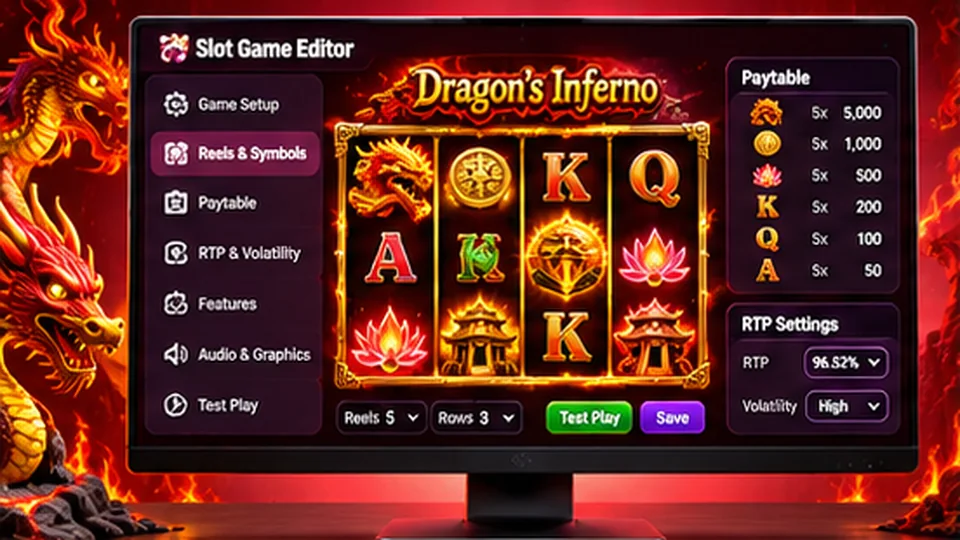
Game studios fall roughly into two camps. The first started in land-based machines, and Australia has a big stake in that world. Aristocrat is headquartered in Sydney, Ainsworth is another Australian name, and Light & Wonder and IGT are global suppliers whose cabinets sit in Australian clubs, pubs and casinos. The second camp was born online and builds for screens from the start.
Names you'll see across many lobbies include Pragmatic Play, Play'n GO, NetEnt, Red Tiger, Hacksaw Gaming, Nolimit City, Push Gaming, BGaming and Quickspin. On the live side, Evolution is the largest name, with others such as Pragmatic Play Live and Playtech also running studios. Each has a recognisable style. Some lean towards high-volatility features and bonus buys; others build steadier games with simpler rules. After a while you can often guess the studio from the way a feature plays out.
The big land-based link families, Lightning Link, Dragon Link and their relatives, were built for cabinets on venue floors. Their online life is mostly in social casino apps played with virtual coins, rather than in real-money lobbies. That's why a lot of “Lightning Link online” searches end in an app store. If you're curious about how those families actually work on the floor, our guides to Lightning Link and Dragon Link break down Hold and Spin and the main variants.
Be wary of any real-money site that claims to offer exact copies of popular land-based titles from a studio it doesn't list anywhere. That's one of the commonest signs of copied or unlicensed game builds, which we cover further down.
Every pokie, RNG table and instant game depends on a random number generator: software that produces an unpredictable stream of numbers which the game turns into reel positions, cards or multipliers. The RNG doesn't know your balance, your last spin or how long you've been playing. Each result is independent.
Independent testing laboratories check that this is true. Well-known names include Gaming Laboratories International (GLI), BMM Testlabs, iTech Labs and eCOGRA. A lab tests the RNG for statistical randomness and checks that the game's maths produces the return it's meant to produce. Studios and operators then display the lab's seal or certificate, usually in the site footer or the game's info panel.
Live dealer games work differently. There's no RNG for the cards or the wheel; the randomness is physical. Studios rely on procedures, camera coverage and equipment checks instead, and keep round histories that operators can query if there's a dispute.
Here's the detail that surprises most players. Many online pokies are released in several return-to-player versions. The studio builds the game once, then offers the operator a menu of configurations with different long-run returns. The operator chooses one. The reels, symbols and features look identical across versions; only the underlying maths changes, usually through how often features land or how much they pay.
That's why an RTP quoted in a review, or on the studio's website, may not match the game on a particular site. The figure that applies is the one displayed in the game's own help or paytable screen on that site. Reputable studios show it there. If a game hides its RTP entirely, you're missing a basic piece of information about it.
Venue machines have their own rules. Gaming machines in Australian venues are approved by state and territory regulators, and the return settings are part of that approval. Our casino games and pokie families hub notes where a figure needs checking on the installed machine rather than being taken from a brochure.
Pub talk about pokies has a long memory, and plenty of it has followed players online. Most of it doesn't survive contact with how the software is actually built.
Each spin is independent. A pokie that hasn't paid a feature in two hundred spins is no more likely to pay on the next one than a pokie that paid on the last spin. The RNG has no memory of previous results, and the long-run return is only reached across a very large number of rounds played by many people.
A certified game build doesn't watch your balance and adjust. What an operator can do is pick an RTP version before the game goes live, which is a fixed setting rather than a live dial. That's a real difference between sites, and it's the reason to read the info screen rather than worry about mid-session tampering on a genuine build.
Two scatters and a third one just above the reel line feels like nearly winning. In software terms, the outcome was a loss like any other. Near misses are part of how the reels are displayed, not a sign that a feature is approaching.
A decade or so ago, playing at many online casinos meant downloading a desktop client. That's largely history. Modern casino software is built in HTML5, which means games run directly in a browser on a laptop, tablet or phone, with nothing to install. The studio's game loads inside the casino's page, and the casino's platform handles your balance.
| Format | What you install | Things to know |
|---|---|---|
| Browser (instant play) | Nothing | Works on most devices; heavier games load slower on weak connections |
| Progressive web app | A home-screen shortcut | Behaves like an app but runs through the browser |
| Native app | An app from a store or the site itself | Real-money casino apps are generally not available in Australian app stores |
| Social casino app | An app from a store | Virtual coins only; no cash prizes |
If a site asks you to install an app file from outside an official store, treat it with the same caution you'd apply to any unknown software on your phone. You're giving it access to a device that also holds your banking apps.
Visitors to Darwin who play on their phones in the hotel or by the pool often notice that pokies use modest data but live dealer streams use a lot. Graphics-heavy games also drain batteries quickly. On a holiday data plan, Wi-Fi is the sensible choice for anything live.
You don't need any technical skills to identify the software behind a site. A few minutes of looking is enough, and it tells you more than the marketing does.
If the provider list is short or vague, the loading screens show no studio at all, and the footer has no operating company, you've learned something important about the site before depositing a cent.
Unlicensed copies of popular pokies circulate on parts of the internet. They look like the real thing, sometimes pixel for pixel, but they run on maths the original studio never wrote and no lab ever tested. Because the studio has nothing to do with them, there's no one outside the site checking the results.
None of these on its own proves a game is fake. Several together are a good reason to close the tab. A genuine studio build is one of the few things in online gambling you can actually verify, so it's worth the check.
Australia regulates software in two very different ways depending on where it runs. On the floor of a land-based casino such as Mindil Beach Casino Resort in Darwin, gaming machines and table games operate under the casino's licence and territory approval. Our Mindil Beach Casino Resort guide covers the floor, hours and visit practicalities.
Online, the federal Interactive Gambling Act 2001 prohibits providing online casino-style games, such as pokies and roulette, to people in Australia. Licensed online wagering on racing and sport is allowed, and the Northern Territory is home base for many licensed online bookmakers. That licensing covers betting, not online pokies. Any site offering real-money online casino games to Australians is therefore operating from overseas, under a foreign licence if it has one at all, and the Australian Communications and Media Authority (ACMA) maintains a list of illegal sites it has asked internet providers to block.
For players, that's another reason the software checks above matter. Without an Australian regulator standing behind the site, the studio's certification and the transparency of the game info are some of the few independent signals you have.
For readers coming at this from the operator side, the same layers apply in reverse. Launching a casino brand usually means choosing between a white-label arrangement, where a provider supplies the platform, licence structure and much of the operation, and a turnkey or self-built platform, where the operator holds more control and more responsibility. Game content comes through aggregators or direct studio deals, and studios themselves are careful about which jurisdictions their games appear in.
Two points stand out for anyone thinking about the Australian market specifically. Major studios generally restrict their real-money content in markets where online casino play is prohibited, and Australia is one of those markets under the Interactive Gambling Act. A business plan that depends on offering online pokies to Australians runs straight into that law, along with ACMA's blocking and enforcement work.
Usually not. Modern casino games are built in HTML5 and run in a browser on phones, tablets and computers. If a site pushes you to install an app file from outside an official store, be cautious about what you're putting on your device.
There's no single best provider; it depends on what you like. Some studios specialise in high-volatility features and bonus buys, others in simpler, steadier games. Try demos from a few studios and you'll quickly notice which style suits you.
An operator can't edit a certified game's maths, but it can choose which certified RTP version of the game to run when the studio offers several. That's why the figure in the game's own info screen on that site is the one to trust.
Online casino-style games can't legally be offered to people in Australia, and the well-known land-based families are mostly found online in social casino apps with virtual coins. Treat any real-money site claiming exact Aristocrat titles with caution and check the studio is named in the game itself.
It means a game, RNG or system was tested by that laboratory at some point. A genuine seal should link to a certificate on the lab's own site. It doesn't cover the operator's payment practices or bonus terms.
Before going online
The destination page provides current terms and eligibility details. Read them before deciding whether to continue.